Today we are going to talk about movies, because don’t we just all like seeing a good movie. So what would you think about movies, without real actors? Can you imagine if real actors were completely left out of the movies? I guess that’s really hard to imagine, because how can we like it, if for instance Chris Hemsworth doesn’t act in the movie or if Scarlett Johansson is left out of the movies. I bet that’s hard to imagine. But what if we told you actors can be virtually made and look exactly like real people?
The first technology that is used for creating virtual actors is computer-generated imagery (CGI). It is the usage of computer graphics for special effects in movies (Technopedia 2016). CGI makes it possible to create or re-create actors and make virtual actors of them. A few famous deceased actors have been digitally re-created with CGI: Paul Walker, Audrey Hepburn, Oliver Reed and Bruce Lee (Matthews 2015).
If Lionsgate can develop the techniques to a higher level it can benefit in the following ways:
- In the future there will be no real actors needed, saving millions of dollars per movie;
- Virtual actors are 24 hours per day available, will not age, are always convenient, won’t die and can do dangerous scenes without risks (UKessays 2015);
- The company will have their own rendering farm which is more efficient and powerful than other farms. Simultaneously making Lionsgate less dependent on other companies like Weta Digital.
Lionsgate will become more competitive if the company develops the technologies (computer-generated imagery and digital cloning) in creating virtual actors further, until real actors become redundant. The technologies then reach a level where real and virtual actors can’t be distinguished from each other. It is hereby important that the firm not only can make a digital clone of a human but also one that is realistic enough in its movements, talking and expressions (Epstein 2006). There is a lot of processing power required for making fantastic visual effect movies: Avatar needed Weta Digital’s super computers for over a month 24 hours per day, processing 8 Gigabytes of data per second (Osborne 2009). Due to Moore’s Law the processing power has become much more powerful allowing the proposed disruptive technology to be fully integrated within ten years (Perry 2014). By evolving these technologies Lionsgate remains innovative and eventually saves money by filming without any real actors (CBS News 2014).
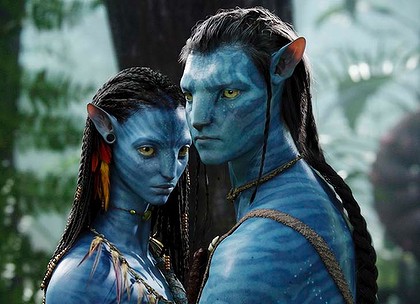
As you can see in the movie Avatar there are also virtual creatures, that look a bit like real human beings. This movie exists for 60% of virtual creatures and 40% of real actors (Wikipedia 2016). This is a good example of how movies can already be made. So can you imagine how movies can be like in ten years from now.
Thus if you have ever had a dream, of becoming an actor or actress now is the time to pursue that dream! Because maybe within a few years technology will have taken over!
References:
CBS News. (2014). Is “digital cloning” actors the future of movie making?. Retrieved October 7, 2016, from https://ispr.info/2014/06/11/is-digital-cloning-actors-the-future-of-movie-making/
Epstein, E.J. (2006). Can You Clone a Movie Star?. Retrieved October 7, 2016, from http://www.slate.com/articles/arts/the_hollywood_economist/2006/03/can_you_clone_a_movie_star.html
Matthews, V. (2015). ACTORS THAT HAVE BEEN DIGITALLY RE-CREATED FOR FILMS WITH CGI. Retrieved October 7, 2016, from http://news.digitalmediaacademy.org/2015/04/11/actors-that-have-been-digitally-re-created-for-films-with-cgi/
Osborne, D. (2009). The computing power that created Avatar. Retrieved October 7, 2016, from http://www.geek.com/chips/the-computing-power-that-created-avatar-1031232/
Perry, T.K. (2014). Digital Actors Go Beyond the Uncanny Valley. Retrieved, October 9, 2016, from http://spectrum.ieee.org/computing/software/digital-actors-go-beyond-the-uncanny-valley
Technopedia. (2016). Computer Generated Imagery (CGI). Retrieved October 7, 2016, from https://www.techopedia.com/definition/24069/computer-generated-imagery-cgi
UKessays. (2015). Virtual Acting In The Cinema Industry Film Studies Essay. Retrieved October 9, 2016, from https://www.ukessays.com/essays/film-studies/virtual-acting-in-the-cinema-industry-film-studies-essay.php
Wikipedia. (2016) Avatar. Retrieved October 10, 2016, from https://nl.wikipedia.org/wiki/Avatar_(film)

Thanks for your blogpost Siobhan, very interesting read.
Although it is entirely possible that in the future Actors will no longer be neseccary, do you really think this will be the case?
An actor has extensive knowledge and experience acquired during years of training. He really needs to ‘get into’ his role, to further understand its personality and threats. This way he/she is able to portret the character on screen. Do you think that these ‘computer programmers’ will be able to create digital persons that are able to portret the same character? Will these reflections still look and feel real to the audience?
Additionally, what do you think is going to happen to voice acting? Cartoons of course, only require voice actors, but what about these next generation movies without actors? Will there be some kind of database with voices to use? Recent games like The Witcher 3, have shown to be of stunning visual quality, but it is the voice acting and dialogues that make it the game it is.
Then the cost picture: How long do you think it is going to become more profitable then using real actors? Imagine that the further development of these technologies will cost a lot of money, and then I am not even talking about the material needed to process it all. Lets imagine that it will be just as costly as real actors within a year or 15, do you still think that it would make as much revenue as the actors do? Will there be a market for these movies?
It is for sure a very interesting topic, but I personally think there are currently just to many barriers for it to work.
Dear Siobhan, it is a nice article to read. As a individual that goes regular to the movies, I highly believe that this technology will be possible to the level where one won’t see the difference between real and virtual actors. The only problem that I could think of, these ”real” actors they don’t only act, but with increasing popularity with particular ”real” actors, they are also used for advertising on different channels. Furthermore, these academy awards, movie awards, oscar awards and all other events where ”real” actors are involved, is gonna change. Hollywood has a significant impact on the world, than only entertainment. I can hardly imagine how virtual actors are gonna take over the real ones. I hope you understand my dilemma and can provide me some insights how this technology will change the other side of the movies industry. Thanks in advance!
Thank you for your post Siobhan.
What an interesting topic! The provocative title of your post is what brought me here, with my immediate reaction being disagreement. How can technology ever be a substitute for real actors?
However, after doing some research on the topic, I figured that the replacement of actors by Computer Generated Imagery (CGI) is not that unrealistic. As a matter of fact, it is happening already.
Darren Hendler, digital effects supervisor at Ditigal Domain, states that CGI is at the point where digital versions of actors can be created that are indistinguishable from the real person.
So should actors see CGI as a threat? Hendler mentions that there are actors who already embraced to process. For example, Tom Cruise, had himself scanned for his role in Oblivion. The scan can be used in movies where he has to be younger. So the possibilities for actors extend by the use of CGI. In the future, it might be even possible to cast digital versions of actors who have long since died. It is already possible to create convincing virtual versions of actors who have never been scanned. Think of the CG version of Paul Walker that was created to complete Fast and Furious 7.
Last, but not least. I would like to mention that actors are more than just a visual image. They are casted not only for their appearance, but also for their acting talent and creativity. As Hendler mentions “We can’t just create a performance out of thin air.”