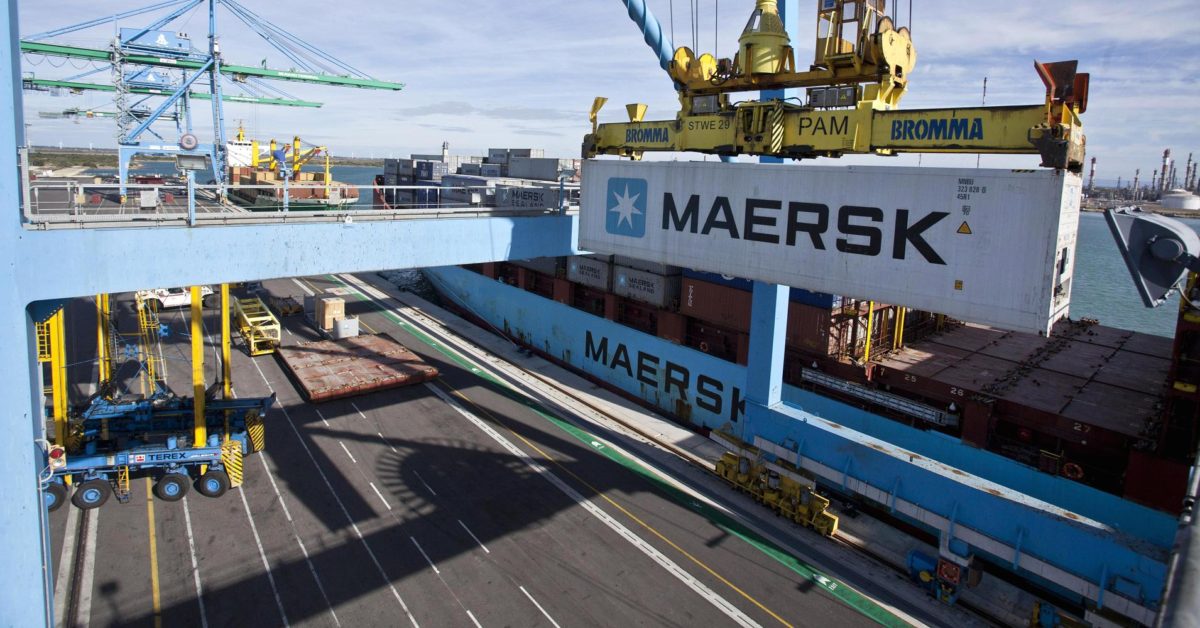
The first introduction of the shipping containers came in 1956, the idea came from a trucking entrepreneur in the US. His idea was to ship whole truck trailers with their load still inside, on the boat. However, he realised that having one container that could be lifted of the truck and into the boat would be much easier and faster (Worldshippingcouncil, 2017). And so, the container was born. Not much has changed since then. Containers are still handled in the same way and a lot of paper work is still involved in moving the containers between different parties. Consequently, slowing down the supply chain. IBM and Maersk are tackling this problem by creating a platform for all parties (i.e. governments, freight forwarders, ports etc) to communicate with each other, share event data and documents. This platform runs on block chain technology, which means they are able to track all data and events that are happening in the supply chain end-to-end (IBM, 2017). The benefits of block chain technology are that all data and events are verified by each party involved in the supply chain. This create transparency and traceability. In addition, according IBM, (2017) it could also significantly reduce delays and fraud and eventually increase the volume of trade by 15%.
So, are there any drawback of block chain technology? There certainly are, I will now name a few. The first major disadvantage of block chain is performance. Because block chain is a decentralized system, is it very complex and slow in processing information (Blockchain Technology, 2016). Furthermore, there is an uncertainty if governments will actually accept the use of block chain. Lastly, to keep block chain up and running there is a lot of computing power needed. This leave a huge carbon footprint behind (Macaulay, 2016).
In my opinion, block chain is a good development, in the way that it saves money for companies and makes the supply chain more efficient as a whole. However, steps have to be taken to make it more secure, faster and less energy consuming.
References:
Blockchain Technology, (2016) ADVANTAGES & DISADVANTAGES OF BLOCKCHAIN TECHNOLOGY
https://blockchaintechnologycom.wordpress.com/2016/11/21/advantages-disadvantages/, 9 October 2017.
IBM, (2017) Maersk and IBM Unveil First Industry-Wide Cross-Border Supply Chain Solution on Blockchain
http://www-03.ibm.com/press/us/en/pressrelease/51712.wss, 9 October 2017.
Macaulay, T., (2016) Blockchain limitations: Is the distributed ledger technology overhyped? https://www.techworld.com/startups/what-are-limitations-of-blockchain-experts-from-odi-explain-3648881/, 9 October 2017.
Worldshippingcouncil, (2017) HISTORY OF CONTAINERIZATION
http://www.worldshipping.org/about-the-industry/history-of-containerization, 9 October 2017.

Hi Rutger,
Interesting article. I definitely think blockchain technology has the potential to disrupt a lot of industries. However I believe the drawbacks will turn out to be bigger than most people expect.
Reading your article, I was wondering what you mean with there is uncertainty if governments will accept blockchain? Are there any cases where governments are still deciding if they will accept blockchain technology? I have read about governments not allowing Bitcoin (which relies on the underlying blockchain technology) or other cryptocurrencies on their country’s exchanges and also not allowing ICO’s. However I have not yet seen governments actually not allowing the underlying technology.
I would be interested in learning morea about that!