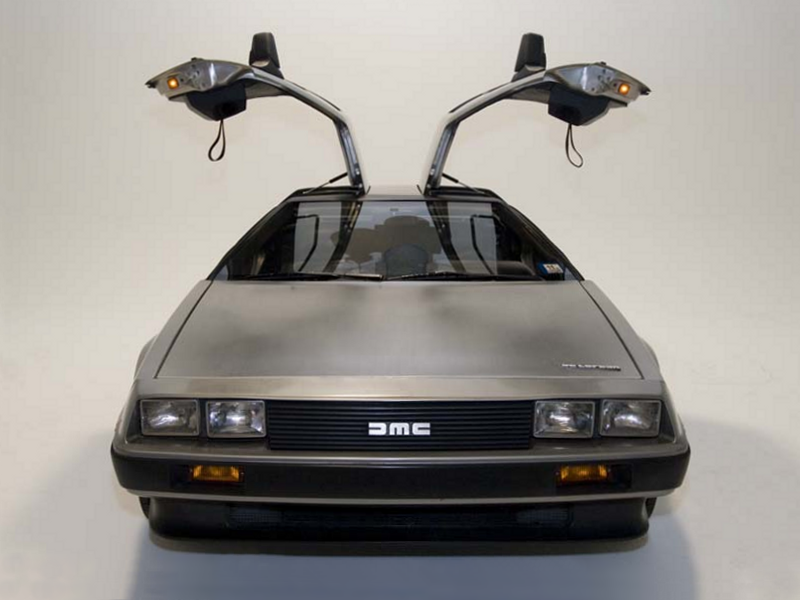
Flying cars have been a goal for humanity for more than a century already. Science fiction writer, William Kaempfert forecasted in 1913 that there will be flying police cars that would direct air traffic of personal flying vehicles which will be parked on households’ rooftops (Milo, 2010). In early movies flying cars were quite different than Kaempfert’s view. For example, Ian Fleming, in his his novels “Chitty Chitty Bang Bang” (1963) “The Man with The Golden Gun” (1964) envisions a future where cars a capable of both driving on the ground and flying when needed (Roberts & Milford, 2017).
In reality, things are more complex and slower-paced. Henry Ford in an interview in 1940 predicted :”Mark my words. A combination airplane and motorcar is coming. You may smile. But it will come.” (Milo, 2010). Are we getting closer to that moment? Probably, but not as fast as predicted by previous discoveries, such as the two “ancestors” of a flying car: the airplane, and the automobile (Milo, 2010). Both were developed quite quickly, since in 1900 only a few people owned an automobile and nobody flew an airplane, whereas in 1915 both were extensively used at the brink of World War 1. It took only 15 years to produce these two vehicles extensively in order to to be considered mainstream. However, the timeline for flying cars is significantly different (Singh, 2017).
The first attempt to build a functional flying vehicle was the Curtiss Autoplane, presented at an aeronautic exhibition in 1917 in New York. It wasn’t functional since it only hopped instead of properly flying. The development of this technology was unfortunately halted due to the beginning of the First World War. Today, there are at least 15 companies that aim to develop a flying personal vehicle in the near future. Many of these are in the United States, but there are also some in the Netherlands, the UK, France, Germany, Russia, among others (Singh, 2017). Besides startups, there are also giant companies involved in this industry. For example, the airplane manufacturer Airbus proposed two concept vehicles that would work on vertical take-off and landing (VTOL), an essential technology for a rapid development of flying vehicles (Markoff, 2017).
Moreover, the recent developments of flying vehicles technology are quite diverse, ranging from road-type cars that turn into a flying vehicle, to small boats that hover about water and to drone-like multicopters, either autonomous or piloted by a human (Roberts & Milford, 2017). It will be exciting to find out which type of flying vehicle will gain momentum and enter the mainstream. It must be mentioned though, that this will be possible only with the support of governments and lawmakers. A first step for this has been done by the Government of Dubai, which announced in February 2017 a new project called autonomous aerial taxi (AAT) (Ward, 2017). The AAT is an autonomous 2-seated Volcocopter with 18 motors, aimed to make the travellers safe against system failures. It is powered by electricity, thus being environmentally friendly, has a maximum flight time of half an hour at speeds of 50 km/h and a top speed of 100 km/h. The goal of AATs is to eliminate the increasing issue of traffic congestion in Dubai The first test for the AAT drone took place at the end of September 2017 (Ong, 2017).
Right now, the perspectives of near-future availability of flying vehicles are promising. Thus, the question is not if flying vehicles will be available, but when will they be available and which type of flying car will dominate the market. Obviously, there will be several hurdles needed to be overcame, such as the regulations in case of accidents, requirements of pilot licenses and so on. However, a first step would be to convince the majority of people who are afraid of this revolutionary technology that the future is happening in front of our eyes.
Markoff, J. (2017) No Longer a Dream: Silicon Valley Takes On the Flying Car. [online] NY Times. Available at: https://www.nytimes.com/2017/04/24/technology/flying-car-technology.html . Retrieved on October 9th 2017
Milo, P. (2010) Flying car Dreams Take Off Again. [online] Forbes. Available at: https://www.forbes.com/2010/05/04/flying-car-department-of-defense-autos-history-opinions-contributors-paul-milo.html . Retrieved on October 9th 2017
Milford, M., Roberts, J. (2017) The future of flying cars: science fact or science fiction? [online] The Conversation. Available at: http://theconversation.com/the-future-of-flying-cars-science-fact-or-science-fiction-76701 . Retrieved on October 9th 2017
Ong, T. (2017) Dubai starts testing crewless two-person ‘flying taxis’ [online] The Verge. Available at: https://www.theverge.com/2017/9/26/16365614/dubai-testing-uncrewed-two-person-flying-taxis-volocopter . Retrieved on October 9th 2017
Singh, S. (2017) Flying Cars are close to moving from fiction to reality. [online] Forbes. Available at: https://www.forbes.com/sites/sarwantsingh/2017/06/05/flying-cars-from-fiction-to-reality/#5c2d50f34b46 . Retrieved on October 9th 2017
Ward, T. (2017) Dubai’s Autonomous Flying Taxi Service Will Be Ready for Takeoff This Year. [online] Futurism. Available at: https://futurism.com/dubais-autonomous-flying-taxi-service-will-be-ready-for-takeoff-this-year/ . Retrieved on October 9th 2017

Dear Mihai,
I think whenever you ask a child to sketch ‘the future’ it will contain flying cars and that is what makes it so interesting that they might exist in the near future. I would like to elaborate a bit on your blog and some questions you pose in it and to add some ideas of my own.
Pilots
I think this problem might be solved easier than one might expect. Looking at the other disruption in the transport sector: self driving cars. One might assume that self driving cars will be mainstream before flying cars are and this gives us some space. The technique used in self driving cars can probably relatively easily be transmitted to flying cars. Also I don’t expect most humans to be able to perform well when traffic becomes three dimensional. Therefore I think it is a good idea to ‘wait’ with the emergence of flying cars until we know how to implement the self driving car technique.
Infrastructure
I think most problems will be caused by the infrastructure, because cities are simply not build for it. As you stated, cars have been mainstream for over a hundred years, yet most European cities still aren’t completely adapted to them.
If we consider flying cars that cannot drive on the road (I do not see the difference with helicopters), the purchase of a car should also include the renovation of your roof since most roofs can’t hold a car.
Convincing
I don’t expect that convincing people, who can afford one, to buy and use a flying car, simply because it is so very cool. I flying cars prove to be more efficient and can keep the costs reasonable than many people will jump at the opportunity to be among the first to use the cars. After that, the mainstream will follow. Especially once people get used to self driving cars and the decreasing control that it comes with I think that people would be willing to accept the same level of control in a flying vehicle.
Imre van Impelen
483028