Artificial Intelligence offers a wide range of exciting opportunities; from self-driving cars, to climate control, to healthcare. In healthcare specifically, experts are using AI and Machine Learning to develop systems that diagnose diseases by looking at photos of the conditions.
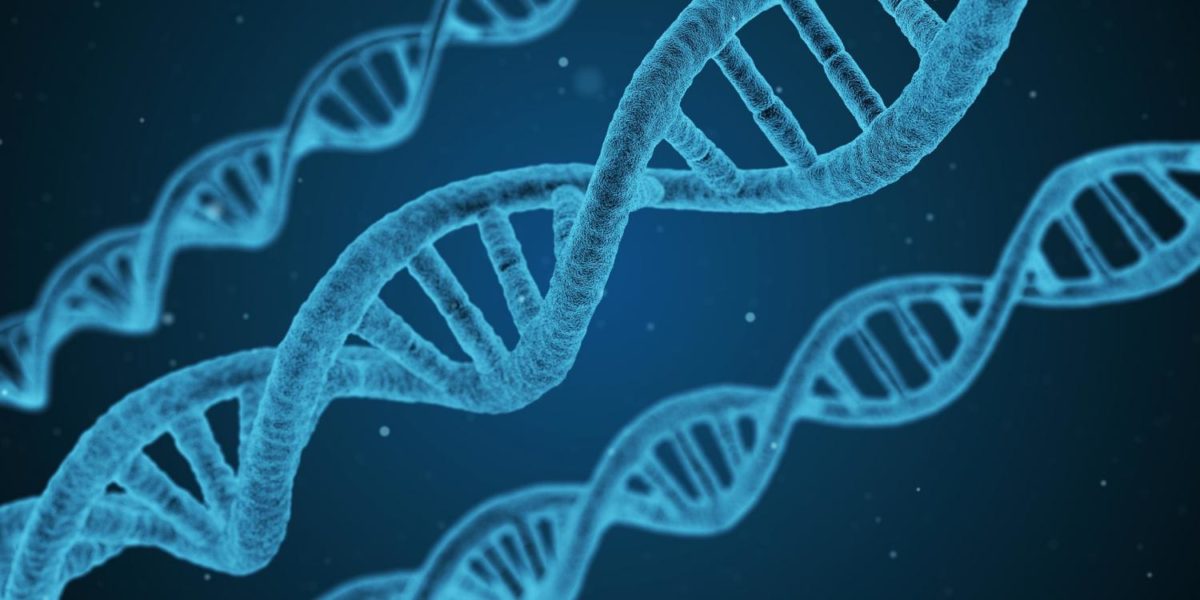
Now, they are diving even deeper. AI systems are being developed that look at the drivers of genetic diseases by analyzing the human genome, which is basically equivalent to our blue print. Causes of genetic diseases like Alzheimer’s or Parkinson’s are thus also in this blue print. A genome is composed of base pairs, A pairs with T and C pairs with G. The human genome has roughly 20.000 genes and 3 billion base pairs (En.wikipedia.org, 2018). This immense amount of data makes the human genome a very hard subject to analyze and this is what AI is being used for. If these AI systems find patterns that they can link to certain diseases, we could cure these diseases before they even happen. (Cspo.org, 2018)
But how do we cure them? By editing the gene, so that the specific code for a disease is no longer present. In short, gene editing works in three steps:
- Adding edited DNA to the cell, in this case a human embryo;
- Breaking the DNA in a different place;
- Repairing the DNA in the place where it was broken, conveniently cells will do this by themselves.
This is where CRISPR, or CRISPR/Cas9 in full, comes in. CRISPR is a method to break DNA in specific places. This way, experts are able to target harmless parts, while avoiding the important genes. This is critical for the process, considering breaking important genes might mess up the entire blue print (En.wikipedia.org, 2018).
Together, AI and CRISPR might be able to eliminate genetic diseases that have affected billions of people in human history. What do you think of this process and the moral implications that go hand in hand with gene editing?
En.wikipedia.org. (2018). Human genome. [online] Available at: https://en.wikipedia.org/wiki/Human_genome [Accessed 8 Oct. 2018].
Cspo.org. (2018). Where Genome Editing and Artificial Intelligence Collide | CSPO. [online] Available at: https://cspo.org/where-genome-editing-and-artificial-intelligence-collide/ [Accessed 8 Oct. 2018].
En.wikipedia.org. (2018). CRISPR. [online] Available at: https://en.wikipedia.org/wiki/CRISPR [Accessed 8 Oct. 2018].

Hi Daan,
I really liked your blog post and I agree that AI will have a significant impact on health care, in terms of both prevention and treatment of diseases.
However, I do think it is important to also note the possible negative side effects of genetic editing. Several studies have already dived into the subject by conducting researches and tests, showing that genetic engineering, the CRISPR/Cas9 in particular, could cause some very severe mutations and genetic damage in humans and mice. Other studies have warned that this technique could also increase the risk of cancer.
In my opinion, DNA modification is undoubtedly the future, but like every other medical treatment, the potential side effects should not be overlooked and further in depth analysis and research is needed.
Sources:
https://www.google.nl/amp/s/www.medicalnewstoday.com/articles/amp/322098
https://advocator-ca.cdn.ampproject.org/v/s/advocator.ca/health/dna-modifications-could-have-dangerous-side-effects-in-the-future/3826/amp?amp_js_v=a2&_gsa=1&usqp=mq331AQCCAE%3D#referrer=https%3A%2F%2Fwww.google.com&_tf=From%20%251%24s&share=https%3A%2F%2Fadvocator.ca%2Fhealth%2Fdna-modifications-could-have-dangerous-side-effects-in-the-future%2F3826
Hi Daan,
I have recently watched Netflix’s ‘Explained’ on this topic and found it very interesting. I do think that someone’s life can be improved tremendously in the future when you check on their genetics before they are born. However, there is a whole issue about how we as humans now interfere with ‘god’ and ‘nature’ and that it is unethical to change such things that are pre-destined for you. Where exactly do you draw the line of ‘I want my child to not suffer how I have my whole life through this genetic disease’ and ‘I want my child to have blond hair and blue eyes?’. Very very difficult topic which definitely needs strict regulations from governments in the long-run.