It is 8am, you wake up and the first thing you do is scroll through your Facebook to check your feed. You can see what your friends are up to, and who knows it might even brighten up your morning.
Nowadays, Facebook has 2.4 billion users. That is almost 30% of the whole world. Imagine how many people are going through the same ‘waking up’ process as you.
A lot of people just use Facebook, without having any knowledge of the risks attached to it. The consumers usually fill in all their personal information to update their profile without a second thought. This combined with the knowledge of Facebook on what you are interested which creates personalized advertising, means a huge amount of data.
According to research, most people don’t even read the privacy statements before accepting it. Even if you put your settings on private, Facebook still has access to all your data. This leads to the ubiquity of data gathering, storage, analytics and personalizing experiences.
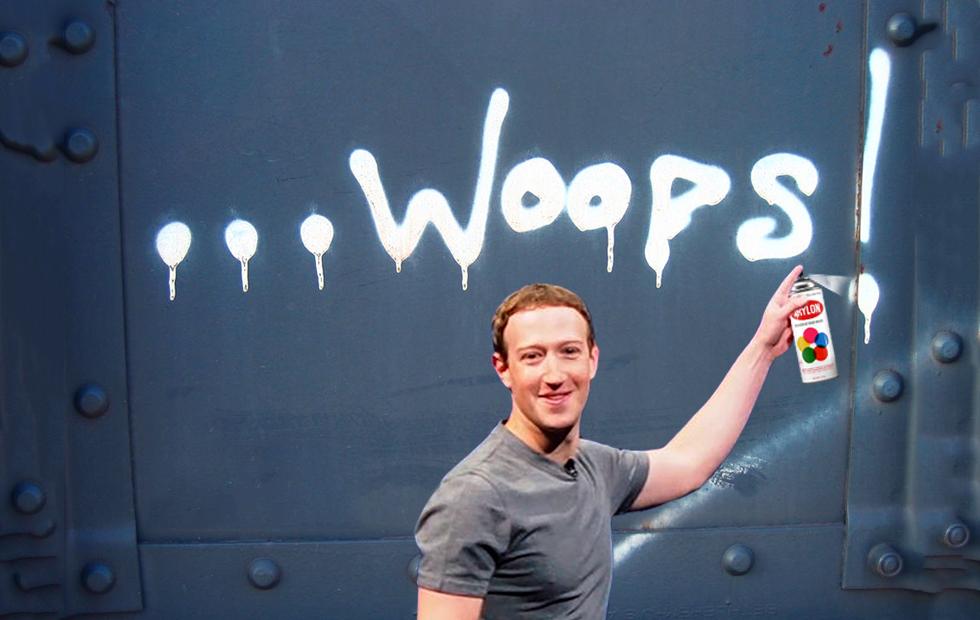
This was one of the reasons for the infamous ‘Cambridge analytica scandal’. Facebook gave Cambridge unauthorized access to 87 million users. Cambridge wanted the data to personalize experiences, optimize sales and maximize return. Their goal was to specifically target a set of customers, who would be interested in certain products/services with the data gathered from social media.
Facebook sharing their data with Cambridge violated citizen rights, because it was given to external parties without their consent. This demonstrated how easy it was for Facebook to share your personal data with other businesses or people. After the scandal, the government set up a set of new laws regarding online privacy, and fined Facebook for 5 billion dollars.
Is it smart to share your personal data on social media? Your privacy is not as private as you might think. However, consumers won’t stop using social media anytime soon. One way to solve this is problem is with the government. They have to set up a set of strict laws and regularly check the social media companie to prevent them from using the data they have in a wrong way.
Do you know any other way to keep your privacy private?
References
Isaak, J., & Hanna, M. J. (2018). User Data Privacy: Facebook, Cambridge Analytica, and Privacy Protection. Computer, 51(8), 56-59.
Acquisti, A., & Gross, R. (2006, June). Imagined communities: Awareness, information sharing, and privacy on the Facebook. In International workshop on privacy enhancing technologies (pp. 36-58). Springer, Berlin, Heidelberg.
Krasnova, H., Eling, N., Abramova, O., & Buxmann, P. (2014, September). Dangers of’Facebook Login’for Mobile Apps: Is There a Price Tag for Social Information?. In ICIS.
https://www.statista.com/statistics/264810/number-of-monthly-active-facebook-users-worldwide/

A question comes to my mind when talking about the “Cambridge Analytica” scandal: is it bad that companies have access to all this knowledge about their consumers? Meaning, is it really bad for all this data to be gathered together and be used for targeted product placement?
When the fork was introduced in Europe as a new tool for eating, it was met by skepticism and even considered extravagant or evil. Human dissection was prohibited in England until the 16th century. Why I am I talking about forks and dissection? Because using data to get to know consumers might be controversial now, but it allows companies to create, improve and market product in ways that could never be done before, which can eventually benefit society as a whole.
My argument is: as with forks (of course, chopsticks are great as well) and dissection, aren’t we maybe too prude to accept something that will just benefit us all?
Hi Alberto,
Great comment! Even though that data collection can be beneficial, the main concern here is the way it is collected. Because I agree with you, It has its benefits. But the problem is that the data was collected in an unethical way. Personal data from Facebook users was shared with a third party. Some of them didnt have any intention to share their private data with any other company than facebook.
So in conclusion, yes collecting data has it benefits, but this can also be done in an ethical way. Imagine what could happen if companies and social media shared every bit of info that they have about you, without your consent.
Interesting topic and easy to digest. So what does the blogger suggest? Eliminate Facebook? What about other companies such as Google and Apple which are also involved in big data and privacy?
Hi Justin,
Very good question ! Facebook is just one of the many examples of how sharing your private date can lead to unethical consequences. Nowadays it is impossible to delete social media apps like Facebook, since it has become an integral part for many people. This is how they stay in touch, and show the rest of world what they are up to.
My suggestions would be to be cautious with what and where you’re sharing online.
I also believe that the government plays a big part in preventing unethical behaviour. They have to regulate and observe what the big companies are doing with their data.
Ofcourse, there might be many more solutions to this problem. What do you suggest ?
Hi Frank,
Interesting topic you picked for the blog. Personally, I agree that governments are the most effective way to regulate tech companies, even though we have not yet seen policies to control the tech industry. Over the last few years, we have observed the innovation which triggered changes in consumer behaviour, for instance from regular texting to platforms like Whatapp and Facebook Messenger. This is a pattern which is comparable to a Schumpeterian creative destruction theory. So when governments start to introduce regulations, it needs to be ensured that innovation is not stifled.
Besides the data privacy issues you mentioned, more problems are resulting from the large amounts of data gathered by the hub economy. For instance, firms are increasingly concerned about the market power accumulation, which makes new entry nearly impossible. Just think about the market power of Google and Facebook in the advertisement industry. Moreover, the hub economy is benefiting few people, resulting in increased wealth concentration which has the potential to threaten our societal system’s balance. Lastly, governments and tech firms are not collaborating to improve national security standards, for instance, to fight cyber attacks (Boskin, 2018).
Due to the variety of issues, governments need to think holistically and in terms of international effort to regulate in order to get a handle on the hub economy. In fact, the OECD is aiming to find a collective solution for international tax regulations for tech hubs by 2020 (DPA, 2019). But countries hold varying opinions and conflicting interest which ultimately need to be aligned. Do you think that international consensus is possible and are governments sufficiently equipped and skilled to find effective policies?
Boskin, M. (2018) It’s high time to regulate the tech giants. The Guardian. https://www.theguardian.com/business/2018/apr/25/tech-giants-must-manage-policies-without-stifling-innovation
DPA (2019) Frankreich sieht Entspannung im Konflikt um Digitalsteuer mit USA. Handelsblatt. https://www.handelsblatt.com/politik/international/digitalsteuer-frankreich-sieht-entspannung-im-konflikt-um-digitalsteuer-mit-usa/24945976.html