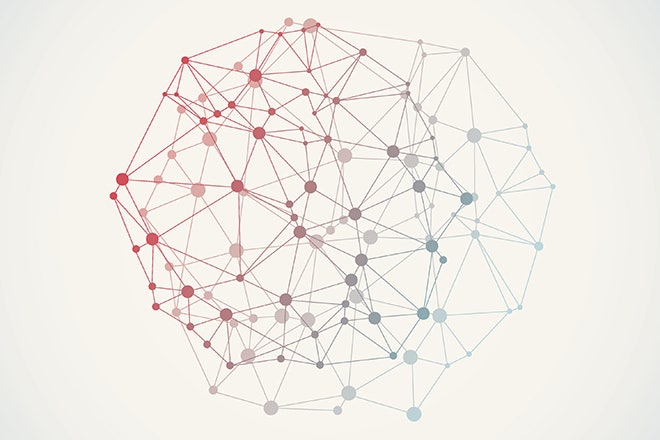
Algorithms are used by social media platforms to show users content they are interested in. This has many advantages. For example, content is filtered and users are only shown pictures, videos and posts that they are interested in. In addition, algorithms can be used to serve targeted advertisements to users. However, the use of algorithms can also have many adverse effects. For example, an algorithm can get people into a certain bubble in which they only get to see news that matches their political preferences.
With the upcoming presidential elections in the United States in November, the number of politically coloured news increases. Political parties focus on their target group via platforms such as Facebook. In addition to politically colored messages that show information about the campaign, they also advertise with disinformation about candidates and fake news. This news is shown to groups of people who are placed in a certain group by an algorithm.
Besides disinformation and fake news, one-sided news is a big problem. Personalized algorithms place people in groups with the same preferences. These people get to see one-sided news and find themselves in a so-called echo bubble. In this bubble there is hardly any news that does not match people’s personal preferences. Flaxman et al. (2016) showed that segregation of news on social platforms is more common among people who frequently visited different news sites. Displaying one-sided news using an algorithm is called an information diet.
Fredrik et al. (2016) showed that people who are constantly exposed to biased information with a political preference end up taking more radical positions and are less tolerant towards people with a different opinion. Stroud (2010) showed that people in the United States who were subject to the so-called information diet developed more radical beliefs during an election campaign. This may increase the power of commercial news channels because they can advertise using the algorithms. It has been shown that promotional content is one of the driving factors for political polarisation on social media.
In addition to social platforms such as Facebook, in which people unite in groups, political polarisation also takes place on other platforms. Youtube’s algorithm, for example, has come under heavy fire for its role in the political radicalisation of people. The reason for this was that Youtube would steer users in a certain direction by means of recommendations. For example, people who watched pro-Trump videos during the elections would only be advised to watch anti-Clinton and pro-Trump videos afterwards.
Algorithms can thus enable people to see only one side of the news. Together with one-sided political advertisements this can contribute to the political polarisation of people. The CEO of Facebook, Mark Zuckerberg, had to appear at the Congress in 2018 for this reason, among others. Political polarisation on social platforms, caused by algorithms, is a growing problem. A proper solution has not yet been found.
Bail, C., 2018. Exposure to opposing views on social media can increase political polarization, sl: sn
Bessi, A., 2016. Users Polarization on Facebook and Youtube
Flaxman, S., Goel, S. & Rao, J., 2016. FILTER BUBBLES, ECHO CHAMBERS, AND ONLINE NEWS CONSUMPTION
Milan, S., 2019. Personalisation algorithms and elections: breaking free of the filter bubble
Tufekci, Z., 2018. Youtube, The Great Radicalizer. The New York Times.
Zuiderveen Borgesius, F. et al., 2016. Should we worry about filter bubbles?
Stroud, N. J. (2010). Polarization and partisan selective exposure. Journal of Communication, 60(3), 556–576.