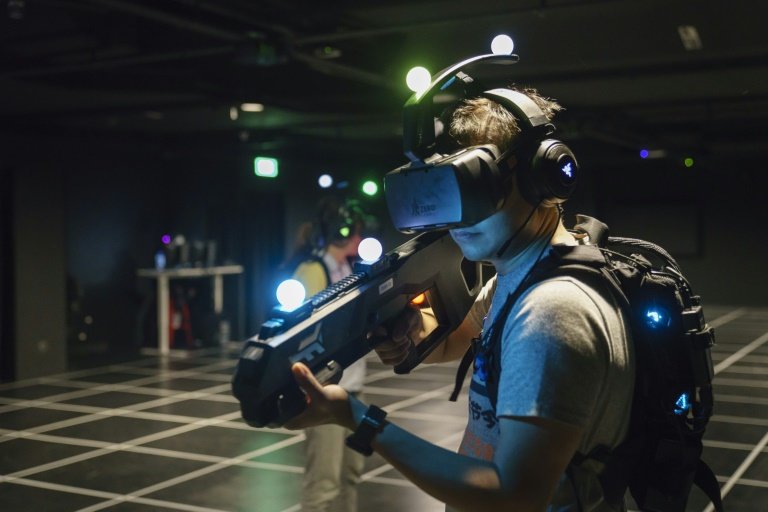
The video game industry has evolved tremendously since its commercial birth around 50 years ago. This year, the video game industry is projected to reach an annual revenue of $159.3 billion, which is nearly a 10% increase compared to last year. Gaming has reached an all-time high with help of the coronavirus lockdown measures, which increased consumer spending on video games. Although the industry is quite clearly booming, companies within the video game industry continue to search for potential innovations in order to make their businesses more profitable. The important dilemma for game developers as well as console makers, however, is whether, and more importantly when to shift the focus to finding an innovation to disrupt the industry.
This search for innovation led many big-name adopters to undertake their own Virtual Reality projects, however many of these adopters have already abandoned their projects as VR gaming failed to woo the masses. Interestingly, Virtual Reality technology was invented before the introduction of the first-ever gaming console, the Odyssey, in 1972. The first signs of life of VR technology actually dates all the way back to 1957, when Morton Heilig, a cinematographer, invented a theatre cabinet multimedia device which was later coined to be the first device implementing VR technology.
A few decades later, VR technology is still considered to be one of the most speculative emerging technologies within the gaming industry. Nowadays, VR technology has become more advanced and realistic than ever before, which has increased expectations for the future of video games. Especially now, more than ever, is the perfect time for VR technology to be widely adopted within the video game industry. VR could perfectly function as a virtual escapism during the ongoing pandemic, the current situation could thus potentially get the ball rolling for a final push to turn VR into a mainstream technology in the gaming industry.
However, the lack of widespread adoption of VR might have its grounds. Whereas the promise and expectations of futuristic VR technology has gotten consumers excited, the actual limitations of these systems have led to an inevitable letdown. Consumers experienced mental fatigue and nausea with prolonged use of VR headsets and the necessary clunky headsets were found to be uncomfortable by early VR adopters. Adding to this misery, the relatively younger technology of Augmented Reality (AR) has shown more promise for future development as it adds visual elements to the real world, instead of having to drift into another world with the use of VR. Thus, reports suggest that VR must undergo several fundamental changes in order to gain consumer traction and compete with AR.
Thus, it seems that even after more than 50 years, VR technology is still very much an emerging technology. The pandemic has given VR a chance at redemption, as companies again aim for widespread adoption. However, VR needs to overcome fundamental flaws and limitations in its technology to gain consumer traction and reach its full potential within the video game industry.
Sources:
https://fortune.com/longform/virtual-reality-struggle-hope-vr/
https://www.forbes.com/sites/quora/2019/04/25/is-vr-the-future-of-gaming/#6fb05161807c
https://newzoo.com/insights/articles/newzoo-games-market-numbers-revenues-and-audience-2020-2023/