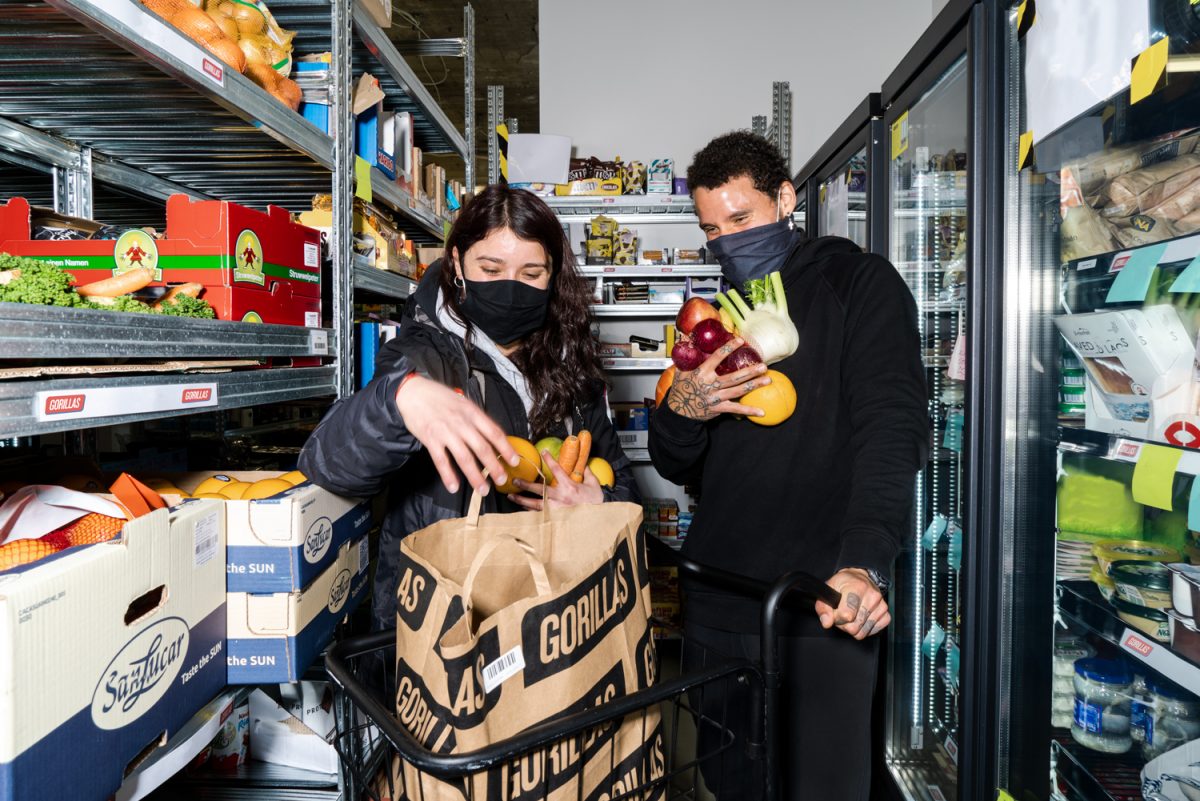
Recently a new, super-fast version of delivery services has been on the rise. Fueled by generous Investors, they send out their armies of delivery personnel, commonly referred to as Riders, in order to get groceries to their destination within 10 minutes after submitting the order in the app. These companies maintain a grid of dark stores offering around 1,000 to 2,000 SKUs that consumers would otherwise find in convenience or drug stores. Gorillas, Flink or Zapp being just a few of those recently launched ventures, saw an enormous growth during the beginning of the pandemic, even making Gorillas the youngest “Unicorn” in the history of Europe. Since then, businesses expanded to most over the continent and even the US.
So, what will the future of Q-Commerce look like?
Customer behavior wise things are looking good for the newcomers. The main USP comprising the offer of Q-Commerce companies is convenience. A recent study from Deloitte has shown, that during the pandemic, customers spent 50% extra money to get what they need conveniently, while prior to Covid-19 a study from PwC highlighted that globally most consumers valued efficiency and convenience as top priority, implying, that convenience is likely to remain an important factor for consumers after the pandemic.
Does this mean, that there are no risks or challenges?
Absolutely not, none of the competitors are running their businesses profitably so far. Now it is an aggressive race for growth and market share. Each company is trying to lure customers into using their respective app by giving out vouchers to first-time users of up to 20$, while some are also offering discounts on their products of around 10-15%.
Not only profitability is an issue. For example, Gorillas has been facing backlashes in Germany for providing low and incorrect salaries to riders or noise pollution coming from warehouses in densely populated areas, even putting certain locations at the risk of having to shut down.
Summarizing, this new business model is offering a wide range of opportunities, as well as risks.
Have you ever used a Qcommerce service? What do you think will the future of Q-Commerce, for example in grocery shopping, look like?
https://www.pwc.com/us/en/services/consulting/library/consumer-intelligence-series/future-of-customer-experience.html
https://www2.deloitte.com/us/en/insights/industry/retail-distribution/retail-and-consumer-products-predictions.html
https://www.mckinsey.com/industries/retail/our-insights/the-path-forward-for-european-grocery-retailers
Europe’s quick-commerce startups are overhyped: Lessons from China

Definitely a trend right now! I’ve wanted to try Gorillas but found them to be a bit too limited in terms of their catalogue (like you say, not many SKUs compared to other services like Picnic) but very handy for lazy nights when you want to order 12 ice creams within the hour (because why not) in the comfort of your home.
Didn’t know about the German controversy, sounds like they have to be more careful especially when entering new markets…
Do you think this disruption was bound to happen, and covid simply accelerated it?
Side note: Had to do a double-check: in your 2nd paragraph, it’s ‘50% of consumers have been willing to spend more’, not that ‘consumers are spending 50% more for convenience’, although many people did have a bit too much money to spend during the early quarantines 😉
*Hannes Schwarzer is the author of this post.
Hey! Thank you for shading light on this new way of commerce. I wonder why investors decided this is the right time to pour millions (even billions) of dollars into such a business model? Given that competitors are driving prices down (race to the bottom), it also seems like most players do not have an edge in technology. Moreover, margins are one of the lowest in consumer goods, and the business model is costly to run given their high overhead costs. I would love to hear your thoughts about this topic. Cheers.
Interesting read and as a Q-commerce customer myself, I’m also interested in the development of those companies.
As you stated in the article the USP of those Q-commerce companies is mainly the convenience they offer. The COVID pandemic have of course created an excellent environment for rapid growth of Q-commerce, but will they be able to grow further and co-exist with/outperform existing supermarket chains?
The grocery industry has shown that it’s very much about retaining customer and creating a long-lasting relationships with households and I personally think that local winners will be more efficient in the long run in comparison to those Q-commerce businesses.
(https://www.winsightgrocerybusiness.com/retailers/online-grocery-shoppers-lack-loyalty)
Also most fundings are now being backed by VCs and (most) Q-commerce companies like Gorilla are not profitable at the moment. This is nothing new, when we look at platform based start-ups. But in this case it’s mainly concerning since the grocery sector has razor-thin margins, and critics say that the huge cost of 10-minute delivery means it will be nigh on impossible for the economics to work in the longrun.
To conclude, I think it will be very hard for those companies to survive, become and stay profitable.
Very interesting post on this new trend! I heard from friends in bigger German cities, like Berlin, that this Q-commerce has already been a trend for a bit longer. Personally I first heard of Gorillas a few months ago and it was something completely new to me. It’s hard to grasp how they manage to consistently deliver their orders in under 10 minutes. With deliveries this quick you’d think something else would have to be compromised. It’s interesting that you mentioned what it is that’s being compromised, the employees. I didn’t hear about this, but now that I looked into it I see that there already have been protests from their employees in Berlin.
I’m a little sceptical about this business model becoming the new way of doing groceries. In general, I think that the delivery of groceries will keep getting bigger but the time constraint and the small order quantities that people tend to have on these platforms such as Gorillas will make it very hard to make it the mainstream way of doing groceries. Although, in crowded urban areas it might at some point become dominant but once you move to the suburbs or smaller scale cities it’s not viable to implement Gorilla’s business model.
Interesting article, Q-commerce has certainly developed into a very large business very quickly. I am curious to see if large grocery store companies will follow up and come with their own alternatives to the convenience of quick delivery, and if this kind of business model will transfer to other industries as well. What do you think?