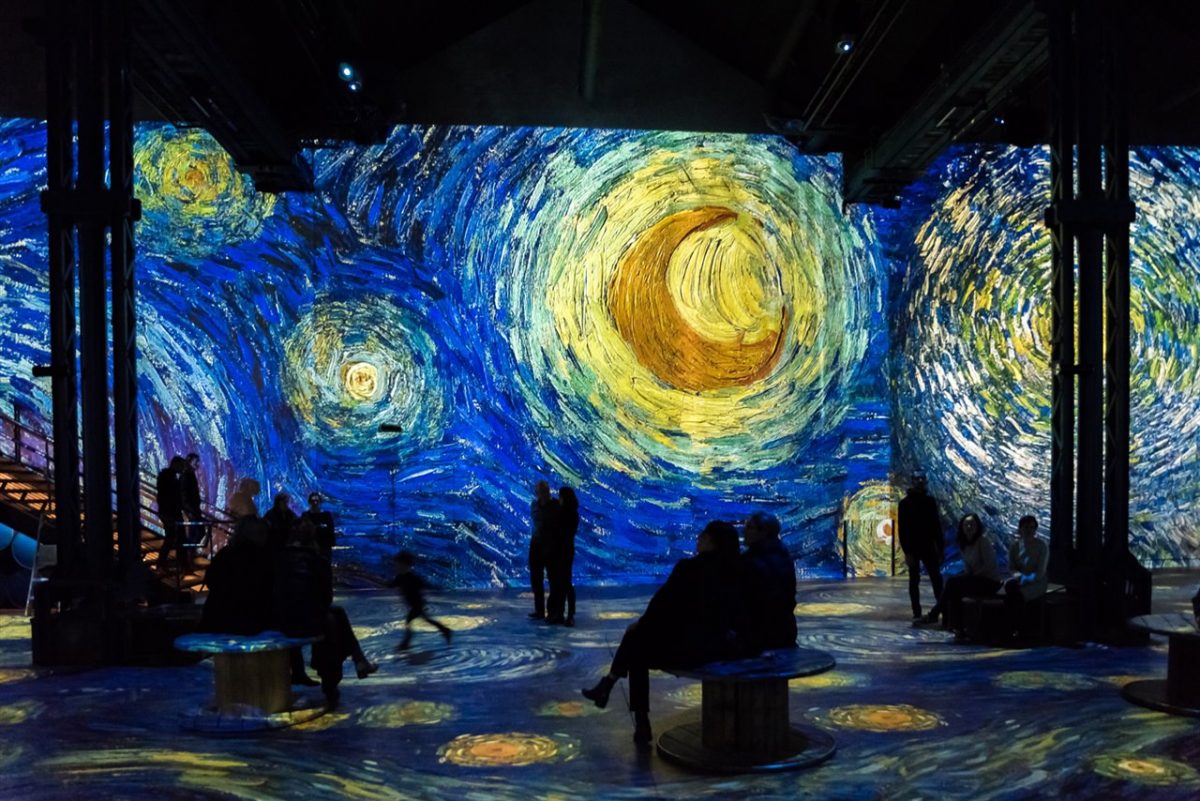
Digital transformation is such a global phenomenon in the technology-driven world that we live in every day that almost everything from simple tasks like staying connected via email or social media to more advanced and complicated tasks like diagnostics are digitalized. Walking hand-in-hand with the development of technology, digital art, a progressive artistic trend, has changed the way that art is being created, shared, and experienced. Instead of only using technology as an assistant in the art creation process, many art professionals have leveraged innovative technology and transformed the art world into immersive and highly engaging media art pieces and art installations. Digital art not only pushes the pushing of the boundaries of people’s perception and understanding of art but also enables artists to reach whole new groups of the audience beyond the conventional boundaries of the art world.
What is digital art?
So, you might wonder: “What is digital art?”. Digital art used to call new media art, refers to any artistic work or practice that made use of digital technology (software, computer, projectors, etc.) as part of the creation or presentation process. For instance, animation, digital painting, and illustrations produced on digital media can all be classified as digital art. With the help of the technology revolution and especially the internet, the digital art era has started blooming and made artwork more visible and accessible to audiences. Advanced technology such as AI (artificial intelligence), VR (virtual reality), AR (augmented reality), 3D printers, and digital designs together with the rising of social media has disrupted the contemporary art world and changed how art is created, consumed, and shared in our connected world. These technologies enabled artists to transform and manipulate their artwork so that they can gain more visibility and stay connected within the artistic community. On the other side, the online art platform gives people easy access to digital art pieces and can also build their own art collections or projects to share with others.
How does digital art change the way people see art?
There are many ways and aspects that digital art has touched on but this blog will mainly focus on the reinvention of museography and the exhibition of artwork, which are the fundamental elements connecting visitors with the art. The art professionals have realized that it is no longer enough to just expose the artworks on a wall in a glamorous museum hall where the visitors passively view and contemplate the art pieces. Nowadays, the new generation requires some new experiences that enable them to interact with the artwork, to immerse and live from the inside of the world of art actively. Therefore, there have been several attempts by cultural institutions to attract a wider and younger group of audience by grasping the latest technologies and forms of media in exhibiting the artwork.
One of the widely known technologies applied in museography and art exhibitions is immersive digital technology which uses digital images and tools for installation programs to create interactive and highly-engaging digital art environments. The original art masterpieces first get transformed into digital images. The digital art will then be projected in the surface area extending from floor to ceiling with the support of multiple video projectors, spatialized sound system and multimedia equipment. The audiences are engaged with multidimensional and multi-sensual immersive art experiences in which the interaction between the viewer and the art is encouraged and the visitor can become part of the pictorial world of the artist. This makes every visit a unique experience so that you won’t step into the same museum twice. In some of the art projections and installations, the art is dynamic that it can react to touch or motion. This interaction enhances the emotion and experience of the visiting journey, especially for younger audiences.
The art world is undergoing an inevitable transformation as it enmeshes with digital technology. With the rapid development of technology together with the new perception of art by both artists and viewers, we can expect more innovative experiments in how art is created, transformed, and exhibited in the future. Thus, we can have a more comprehensive view of the impact of digitalization and technology on the creative world.
Digital art centers: https://www.culturespacesdigital.com/en/centres-art-numerique
References
ARTDEX. 2022. How Technology is Changing the Art World – ARTDEX. [online] Available at: <https://www.artdex.com/how-technology-is-changing-the-art-world-2/> [Accessed 10 October 2022].
Culturespacesdigital.com. 2022. Digital art centres | Culturespaces Digital® – Site officiel. [online] Available at: <https://www.culturespacesdigital.com/en/centres-art-numerique> [Accessed 10 October 2022].
Eden Gallery. 2022. Digital Art: What is Digital Art Definition? – Eden Gallery. [online] Available at: <https://www.eden-gallery.com/news/what-is-digital-art> [Accessed 10 October 2022].
Future, H., culture, D. and Art, N., 2022. New technologies: pushing the boundaries of Art. [online] Hello Future. Available at: <https://hellofuture.orange.com/en/interactive/new-technologies-pushing-the-boundaries-of-art#theory-practice-digital-is-democratizing-art> [Accessed 10 October 2022].

Hi Linh, very interesting topic! I think the movement towards the incorporation of technology in art is amazing. Although art (without the use of technology) is by definition limitless, the addition of advanced technologies extends this even further (which sounds counterintuitive). Like you said, the new generation enjoys artwork you can interact with. However, I am not entirely sure I agree with the sentence: “The art professionals have realized that it is no longer enough to just expose the artworks on a wall in a glamorous museum hall where the visitors passively view and contemplate the art pieces”. I believe there will always be a sizable portion of people who see art as a form of escapism, be it from current world affairs, personal issues, or even the digitisation of our lives. In these cases, these artworks that are to be viewed passively, might be the most immersive art pieces of them all. Nevertheless, I have actually been looking into so-called ‘creative coding’ courses online, because I would love to learn more about it, with the goal of actually creating digital art myself. I have been following a couple of digital artists on various social media platforms, who share a lot of their current projects. Funnily enough, a lot of them also work in the corporate world: some work at Google, some at Meta, etc. These people, who mostly have programming jobs, have realised that they are able to combine their lifelong passion for art with their professional life. This is something I personally would love to achieve: it allows for a creative outlook on your job affairs, which can only enhance your overall results.