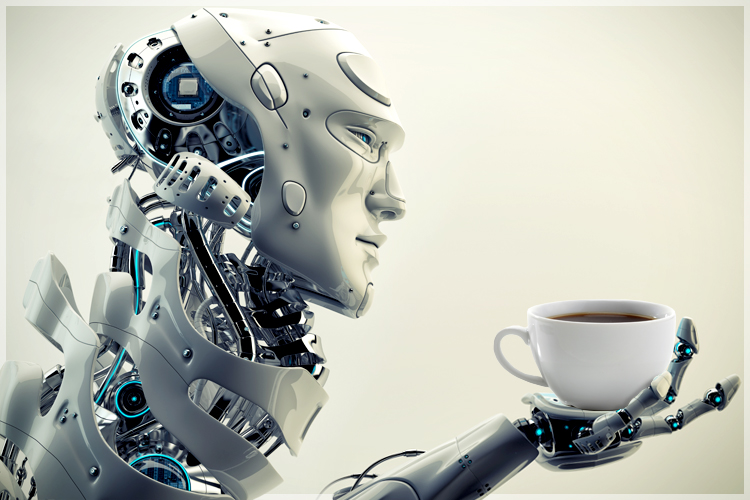
The Internet of Things (IoT). I’m quite sure everyone has heard about this phenomenon at least once, as it has become a growing topic of conversation for the past few years. It is simply defined as ‘the concept of basically connecting any device with an on and off switch to the Internet (and/or to each other)’ (Morgan, 2014). Clear right? Well, let’s be honest. Not exactly. Though the topic is often mentioned when it comes to digital trends, its impact on our day-to-day activities remains quite vague for most people. What is in fact the actual value behind the hype and will it really be as life-changing as people say it will be? Let’s zoom in on the various possibilities that the Internet of Things offers and its future development in order to answer this.
According to a study by McKinsey (2015), the IoT could potentially have an economic impact of $4 to $11 trillion dollars a year in 2025. One of the most promising features of the IoT is the functionality it will bring to our homes, dubbed as ‘Smart Homes’. Imagine being woken up by your alarm clock at 7 AM and have that same alarm clock send off a signal to your coffee machine to prepare your favourite cup of coffee. Or say that you haven’t reached home yet, but can already switch on the air-conditioning or switch off devices when you already left home. Smart homes products are expected to save people time, money and energy (Kashyap, 2016). Another promising application of the IoT is ‘Smart city’ where the use of sensors will help solve issues such as pollution, energy usage and traffic congestion in cities. Also, by having sensors, it will be possible for people to easily find available parking spots across town. Besides these features there are a ton more of opportunities that derive from IoT for example connected cars and advancements in agriculture.
So, the potential is huge right? With big players like Microsoft and Ge jumping on the bandwagon recently, it’s clear that the actual value of the phenomenon is ready to be seized. However, there are things that need to be addressed when doing this with security being one of the most important ones. Just think of the amount of data and privacy risks that are related to billions of devices being connected. Also, the tools that are used to store and analyse the data need to be re-assessed, as companies will be dealing with tremendous data amounts (Morgan, 2014).
Just thinking about the possibilities that IoT will offer us, makes me incredibly excited for the future. How do you guys feel about this hype? Do you think it will live up to its potential? Share your thoughts!
References:
Kashyap, S. (2016). 10 real-world applications of internet of things (IoT) – explained in videos. Retrieved from: https://www.analyticsvidhya.com/blog/2016/08/10-youtube-videos-explaining-the-real-world-applications-of-internet-of-things-iot/
Morgan, J. (2014). A simple explanation of ‘The internet of things’. Retrieved from https://www.forbes.com/sites/jacobmorgan/2014/05/13/simple-explanation-internet-things-that-anyone-can-understand/#6ec772c51d09
McKinsey (2015). Unlocking the potential of the internet of things. Retrieved from
https://www.mckinsey.com/business-functions/digital-mckinsey/our-insights/the-internet-of-things-the-value-of-digitizing-the-physical-world

The emergence of IoT has indeed already showed the society great practical advantages. Many parking spots, for example at Schiphol, already have sensors that detect whether parking spots are available or not. The software behind these smart technologies aren’t that complex. But setting up a working system with all the required tangible elements is the expensive part, think about all the hardware that has to be installed to let the system function properly. That’s why I think that the so called ‘smart homes’ won’t make their way in the average household. The costs of these system will be too high to be truly marketable. On the other hand, public places and higher budget households can definitely enjoy the endless possibilities of the IoT. I’m very curious too how IoT will make it’s way into day-by-day living.
Hi Yousra, interesting blog post! I also think it will be very exciting to see what the future of the IOT will bring us, the sky seems to be the limit. However, one thing that immediately pops in my mind when talking about IOT is the privacy issues that come along with the big data from IOT. All this big data can of course be used in very innovative and helpful ways, but there has to be a line drawn somewhere. Who decides where that line is? I think the government should be very wary of the technological advancements regarding IOT, because the exciting IOT future could possibly turn very sour if corporates get a free pass to decide what to do with the big data gained from IOT.
https://www.sas.com/en_ph/insights/articles/big-data/big-data-and-iot-two-sides-of-the-same-coin.html
Very interesting thoughts in IoT, indeed! There is no doubt that Internet of Things already has many practical applications that are ready to be deployed. One very nice example is Alexa system made and sold by Amazon, that can be connected to many devices in your home, starting from light bulbs and ending with your central heating system. Such a system not only makes your life much more comfortable and “cool”, but it actually is able to make your day and what you do much more efficient. Just imagine how much time you can save by not doing all those things like adjusting temperature or search for tomorrows weather manually.
However, there are certain aspects that hinder the full development and integration of IoT. Previous contributors have mentioned aspects like high cost of hardware and data security or privacy. In order to shortly add to these issues, remember how fast the hardware has been developing. It is only a matter of time when sensors for use in IoT applications will become affordable for masses. Much more complicated issue is the question of data security and privacy. Is this something blockchain could attempt to solve? That is a topic of another discussion.
Last but not least, another issue I would like to point out is the actual feasibility of technological solutions. You mentioned the use of IoT within agriculture which is certainly a hot topic and most of the people think of agricultural drones, when it comes to this discussion. If we want to use drones for detection of different infections such as e.g. fire blight in apple and pear trees, the current state of technology is insufficient. For a proper detection of this particular illness, a three-dimensional image of the respective tree must be produced. This practically means hunderds of pictures from different angles. The technological solution has not been found yet.
The point of the previous paragraph is that in many cases, we still do not have a feasible technological solution to use IoT for more than controlling light bulbs or coffee machines. In any case, it is only a matter of time. Looking forward to it.
Reference for research of fire bligt drone detection:
http://www.goodfruit.com/disease-seeking-drone-research/