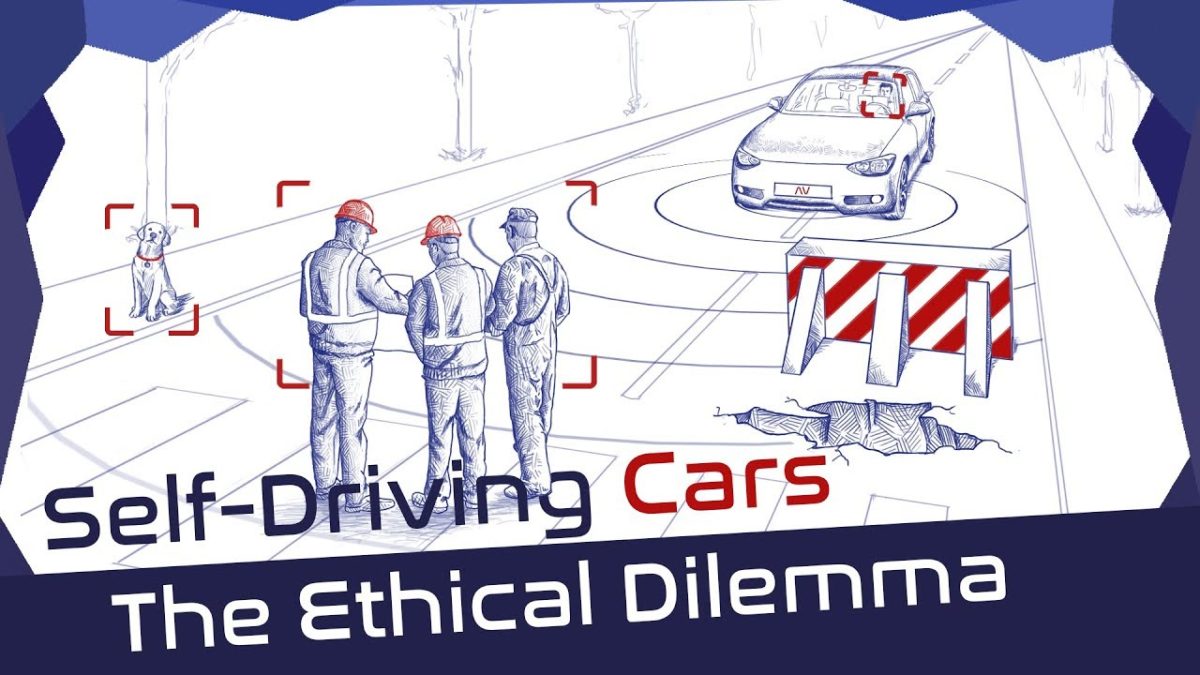
Through digitization, governments and businesses are increasingly receiving and using data. This also has consequences for the environment in which they operate. It raises the question of whether everything that is technically possible, is also desirable. We all know the ethics discussion regarding privacy in the rise of digitization. However, we have come to the point that digitization is not only an instrument to map the physical world, but also to analyze and intervene in our physical world. Many of us have heard about the increasing use of AI in for example China, where they can register if you walk through a red traffic light, and can charge you a fine for it.
However, there are many more moral dilemmas, such as those related to artificial intelligence (AI) and robotics. Here is an example, also known as the trolley problem: a rushing train will kill five railroad workers, but you can save them by converting the points, after which “only” one man is killed. What would you do in this case? In the future, this will also become an increasingly relevant issue for autonomous vehicles and other machines. Robotic systems within the infrastructure offer opportunities for safety and are already being used for that. A self-driving machine cannot be distracted while driving or falling asleep, people can. However, if an accident is unexpectedly caused by a robot, the question is who is responsible for that accident. Because how does a self-driving car decide on life and death? And who is responsible for the actions of artificially intelligent devices? How will we program them in this case? These are very important questions arising with the development of these kinds of technologies, and multiple stakeholders will be involved in answering those questions.
One of Uber’s self-driving cars killed a pedestrian, Elaine Herzberg. A US federal investigation showed that the car did not stop because of a disabled emergency stop system. Uber has been found not criminally liable. But then who is?
Sources:
1. Alexandra van Ditmars – Hoe Ethisch Kan De Zelfrijdende Auto Eigenlijk Zijn? (Trouw; October 31, 2018)
2. Petra van der Werf – De Ethische Kant Van De Digitale Transformatie (March, 2017)
3. Paul Mozur- Inside China’s Dystopian Dreams: A.I., Shame and Lots of Cameras (The New York Times; July 8, 2018)
4. Meriame Berboucha – Uber Self-Driving Car Crash: What Really Happened (Forbes; May 28, 2018)
5. Alison Griswold – Uber Found Not Criminally Liable In Last Year’s Self-Driving Car Death (Quartz; March 6, 2019)