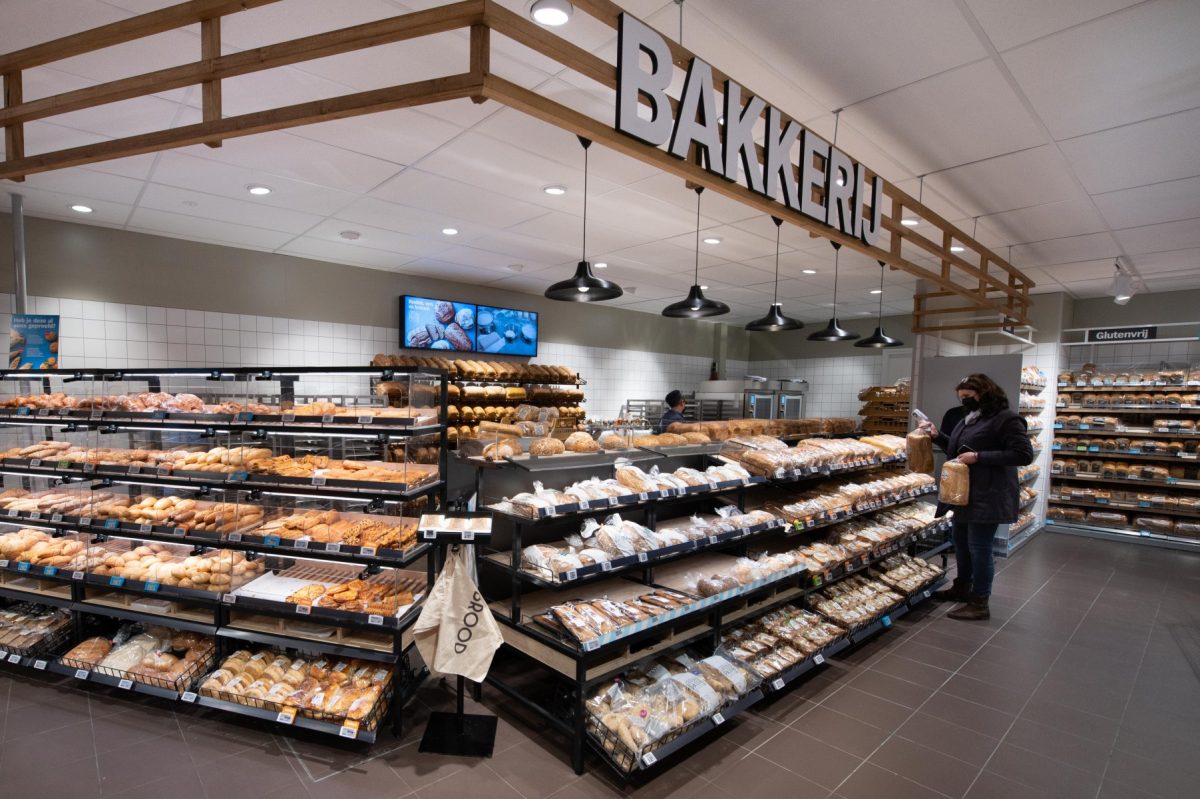
My group gathered in an empty tutorial room before a class to discuss the first assignment we would be working on this year. We were tasked with creating a plan to either transform an existing organization or build a technology-enabled venture. We quickly realized that any straightforward plan that we could come up with to start a venture had already been developed, so we decided to transform an existing organization. After brainstorming we had come up with a few ideas and after taking a vote we decided on creating an Albert Heijn in-store navigation tool. We divided up the work of creating the short proposal and I created the problem and context section, and after handing it in we got a green light. Even though it would not be needed to hand in for the assignment we still created a report so we could get our thoughts in order and get everyone on the same page. My task was to analyse the ecosystem in which Albert Heijn was operating and how to create a competitive advantage and defend it. I concluded that supermarkets are an extremely competitive space where customers can easily change what store they visit and that the main advantage Albert Heijn had in implementing this technology was that they had several technologies already in place that could strengthen the system which would be more expensive and time consuming for competition to create and implement. Beyond my primary task I also reviewed what others created and gave suggestions and feedback where necessary. So, during this we came up with a lot of ideas for what other pain points there are in the grocery shopping experience and features that could be interesting for Albert Heijn. These includes features like your desired item being out of stock and needing to find an alternative, creating meals from products that have discounts or for Albert Heijn finding ways to upsell items along the route, gathering data about store traffic and managing this traffic. We compiled all these ideas, but we did not know which features were important and should be included in the app and which weren’t. So, to find this a survey was held aimed at Albert Heijn shoppers which was instrumental in deciding what features customers would want, and which just sounded good in a meeting. After this data was gathered we found that some ideas like delegating adding substitutes for items that are out of stock and suggesting items that fit well with other items in the cart were rejected by most survey takers. This partly surprised me, because personally I do not care about what specific products I buy, if it is similar, it is fine. Having to choose for every product which has an obvious substitute seemed like a nuisance. After processing this information a rough outline of the slides was created. We reviewed and critiqued this as a group and it was decided what should and should not be included. Everyone finalized their individually assigned slides on their own and after a final check to see if everything made logical sense and looked good visually it was handed in. For the project fair it was decided that the short demonstration would go best if 1 person showed the demo we made and talked about the decision-making process while the others answered questions and added comments if they deemed necessary.
The main thing I learned about collaboration was how to manage work with different group members working on different schedules, previously in group projects I have had very similar schedules as other team members so scheduling a meeting with everyone to get on the same page was easy. But if this is impossible because people have conflicting schedules you still need to get everyone on the same page, our solution was to have those who could not attend send some ideas before the meeting and afterwards holding the meeting with those that were available and sending a summary of the conclusions and decisions to those that could not attend.
The main thing I learned about business strategy is that the main objective a company should focus on to become successful and that is creating value for the user, it does not matter how clever an idea is or how intricate a solution, a business needs to provide value to the user otherwise people will have no reason to use it. A company should not waste money on features that will not get used and you should not be afraid to cancel or criticize a feature if it is found to not provide value to the user.
The main thing I learned about Artificial Intelligence in this project is that people are not ready to delegate tasks to agents completely, people still want the final human input in the decision-making process. People are fine with Artificial Intelligence giving suggestions and choosing between multiple, but the final decision must be theirs.
By Maurice Hoogstrate (828318mh) Team 32
